What Is Imaging-Guided Tumour Ablation?

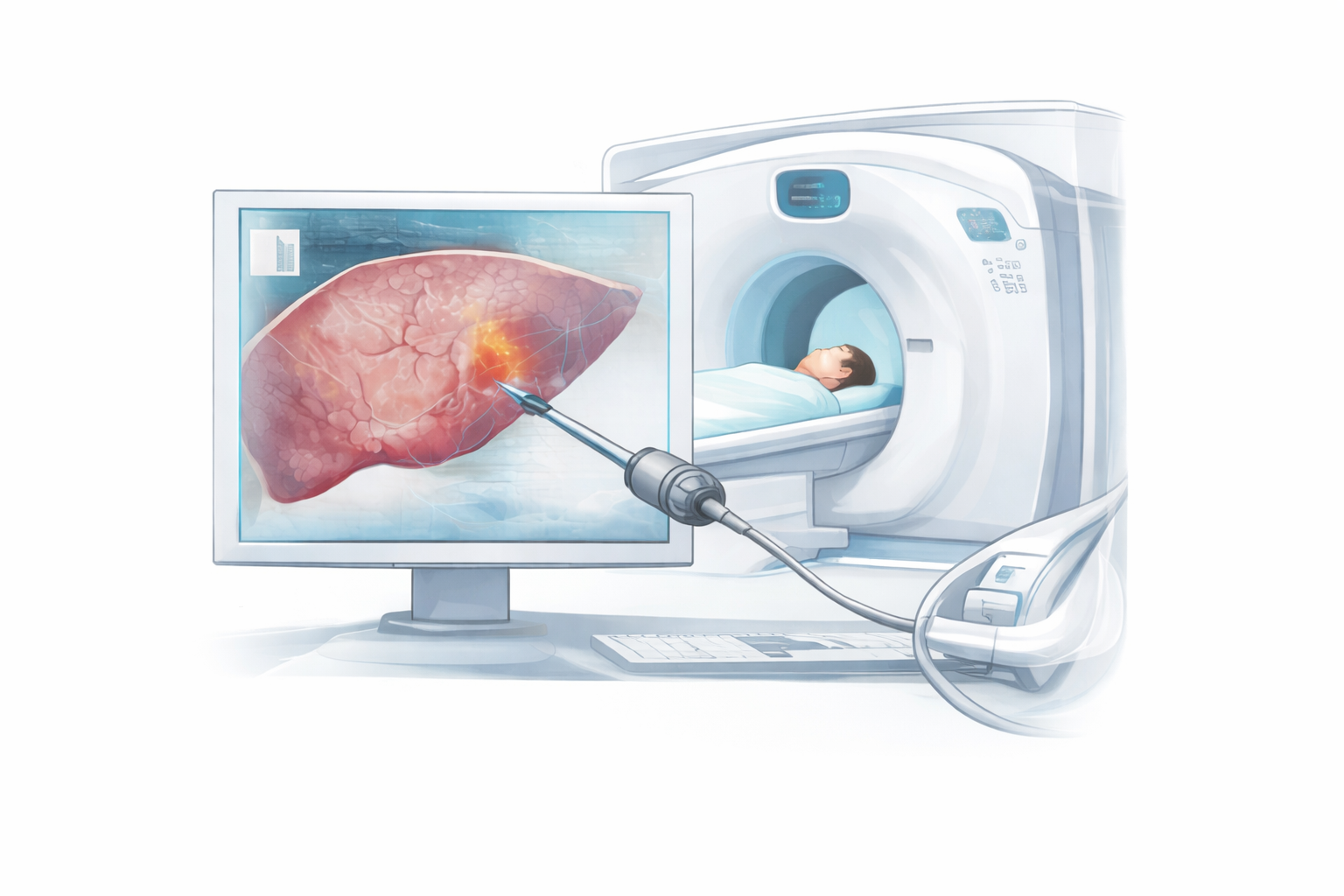
Tumour ablation refers to a medical procedure that destroys tumour tissue by applying controlled energy directly to the tumour. This energy may be delivered as heat or freezing.

During the procedure, a thin probe (similar to a needle) is inserted through the skin and guided precisely into the tumour using CT (Computed Tomography) and/or ultrasound imaging. Imaging guidance allows accurate targeting while minimising damage to surrounding healthy organs.

Several ablation techniques may be used depending on tumour size, location, and type:

  • Radiofrequency ablation (RFA) – uses electrical energy to generate heat that destroys tumour cells.
  • Microwave ablation (MWA) – uses microwave energy to rapidly heat tumour tissue, often suitable for larger tumours.
  • Cryoablation – uses extreme cold to freeze and destroy tumour tissue, particularly useful near sensitive structures.

Imaging-guided tumour ablation is commonly used for selected solid organ tumours, including:

  • Liver tumours
  • Kidney tumours
  • Lung tumours

In appropriately selected patients, tumour ablation can achieve outcomes comparable to surgery, particularly for small or well-defined tumours.

Compared with conventional surgery, tumour ablation offers several important advantages:

  • Minimally invasive ‘pinhole’ procedure with no large incisions
  • Lower risk of complications and reduced post-procedure pain
  • Faster recovery and shorter hospital stay (often overnight only)
  • Suitable for patients not fit for major surgery

Tumour ablation is usually performed under conscious sedation or a short general anaesthetic. The interventional radiologist carefully plans the safest and most accurate probe path using CT or ultrasound imaging.

Once the probe is positioned within the tumour, energy is delivered to destroy the tumour tissue in a controlled and targeted manner. The procedure typically takes 1–2 hours, depending on the tumour.

After the procedure, patients may experience:

  • Mild pain, tenderness, or bruising at the probe entry site
  • Temporary fatigue or discomfort

These symptoms are usually short-lived and well controlled with simple pain relief. Most patients are encouraged to mobilise shortly after the procedure and can resume light activities quickly.

Hospital stay is usually one night or less.

Imaging-guided tumour ablation is generally very safe. As with any medical procedure, potential risks include:

  • Bleeding
  • Infection
  • Injury to nearby organs or tissues
  • Risks associated with sedation or anaesthesia

At Sydney Interventional Radiology, these risks are minimised through meticulous planning, precise imaging guidance, and the use of prophylactic antibiotics where appropriate.

Interventional radiologists are medical specialists trained in interpreting advanced medical imaging and performing minimally invasive, image-guided procedures.

Their expertise in CT and ultrasound guidance allows accurate probe placement for tumour biopsy and ablation, making them uniquely qualified to deliver safe and effective tumour ablation treatments.

If you have been diagnosed with a tumour or advised to consider tumour ablation, a consultation with an interventional radiologist at Sydney Interventional Radiology can help determine whether this treatment is suitable for you.

Please speak with your referring doctor or contact Sydney Interventional Radiology to arrange an appointment.